Have you heard of Understanding the Endocannabinoid System before? Most people haven’t. Yet this system works inside your body every minute of every day.
Think about your body like a smart thermostat. When the temperature rises, the thermostat cools the room. When the temperature drops, it warms things up. Your body uses a similar idea.
That control system? It is the endocannabinoid system, often called the ECS.
Scientists discovered it in the early 1990s while studying cannabis. The discovery surprised researchers. They expected to learn about plant chemicals. They found an entire biological system instead.
Why does this matter?
This system helps regulate many basic functions:
- mood
- sleep
- appetite
- memory
- immune response
- pain signals
Without it, the body would struggle to keep internal balance.
Curious how this system actually works? Let’s break it down step by step.
Understanding the Endocannabinoid System
When people talk about understanding the Endocannabinoid System, they often start with one simple idea: balance.
Your body always tries to maintain stability. Scientists call this homeostasis.
Picture walking outside on a hot day. Your body sweats. When cold air hits your skin, goosebumps appear. These reactions help maintain balance.
The endocannabinoid system helps control this balancing act.
Researchers first described this system in 1992. Their goal involved studying how cannabis compounds interact with the body. Instead of finding only plant reactions, they found natural chemicals already present in humans.
Those chemicals became known as endocannabinoids.
The word breaks down easily:
- endo = inside the body
- cannabinoid = compounds related to cannabis
Your body produces its own cannabinoids. No plant needed.
These natural compounds send messages between cells. They help control:
- stress responses
- immune signals
- pain perception
- mood stability
Many scientists now see the ECS as one of the body’s most important regulatory networks.
Want to explore deeper? The system itself includes three main parts.
Core Components of the Endocannabinoid System
To grasp an understanding of the Endocannabinoid System, it helps to examine its core pieces. Think of them like parts of a communication network.
Three elements work together:
- endocannabinoids
- receptors
- enzymes
Let’s break them down.
Endocannabinoids
These molecules act as chemical messengers.
Two well-known examples include:
- Anandamide (AEA) – often linked with mood and pleasure
- 2-AG (2-arachidonoylglycerol) – linked with immune and nervous system signals
Your body creates these compounds when needed. They travel through the bloodstream and attach to receptors.
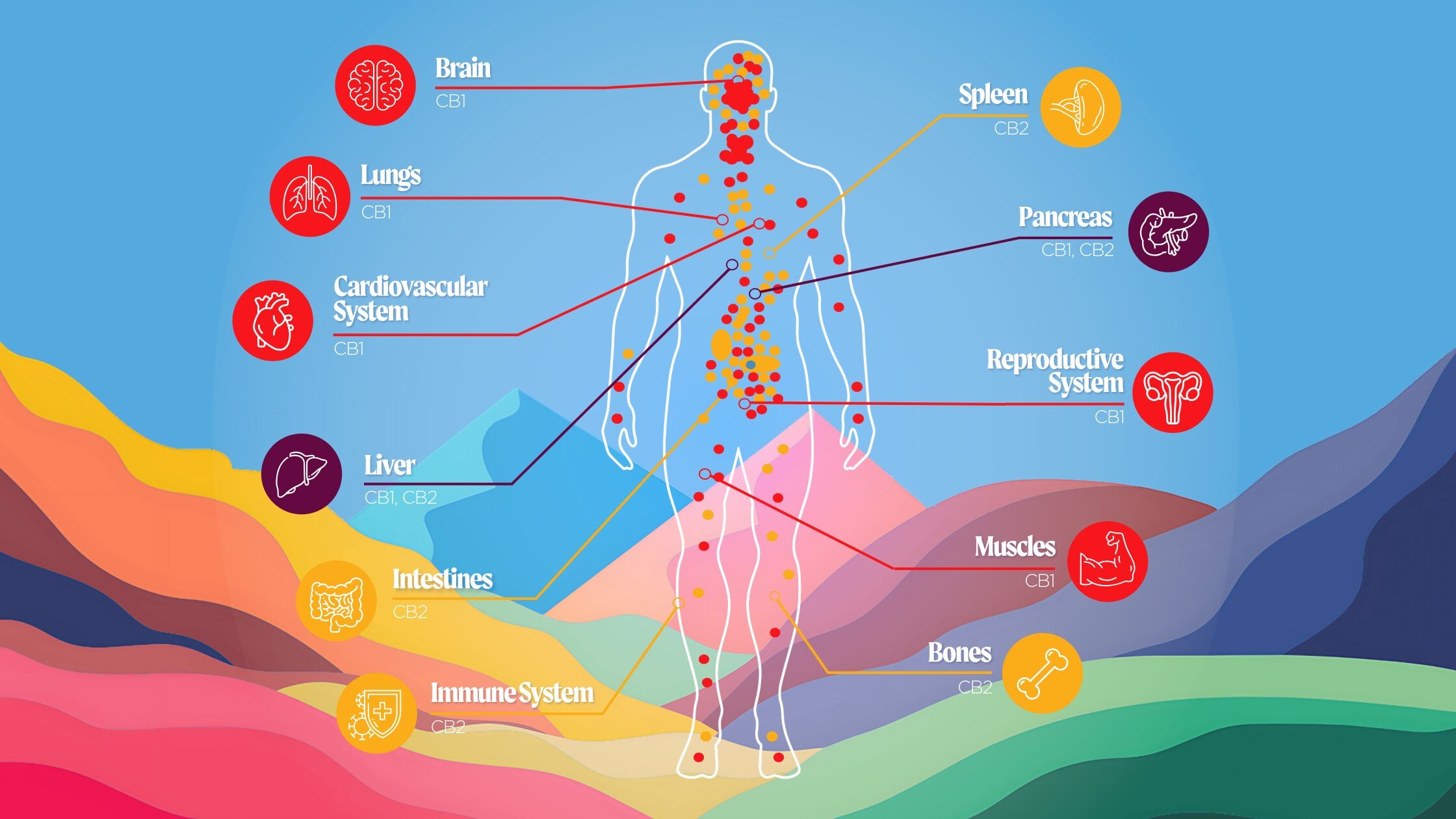
Cannabinoid Receptors
Receptors sit on cell surfaces. They receive chemical messages.
Two primary receptors exist:
CB1 receptors
- found mostly in the brain and nervous system
- influence mood, memory, and appetite
CB2 receptors
- found in immune cells and organs
- linked with inflammation and immune defense
Enzymes
Enzymes break down endocannabinoids after messages are delivered.
Two key enzymes include:
- FAAH – breaks down anandamide
- MAGL – breaks down 2-AG
Without these enzymes, signals would last too long.
This entire system works like a text message thread between cells. A message gets sent, received, and then cleared.
How the Endocannabinoid System Maintains Body Balance
The biggest reason scientists study the ECS relates to one simple goal: balance.
Understanding the Endocannabinoid System helps explain how the body keeps internal conditions stable.
Let’s look at a few everyday examples.
Mood and Stress
Feeling anxious after a tough day?
Endocannabinoids help regulate stress signals in the brain. When levels stay healthy, mood tends to stabilize.
Some scientists link low ECS activity with anxiety or depression.
Sleep Patterns
Ever struggle to fall asleep?
The ECS interacts with sleep cycles and circadian rhythms. Balanced signaling can support deeper rest.
Appetite Control
Why does hunger rise or fall?
Endocannabinoids influence appetite signals. The brain receives messages about energy needs.
This explains why certain cannabis compounds increase appetite.
Pain Regulation
Pain signals travel through the nervous system. The ECS can modify those signals.
Some researchers study cannabinoid therapies for chronic pain.
The more scientists explore this system, the clearer its importance becomes.
Understanding the Endocannabinoid System and Cannabis Compounds
Now comes the question many people ask.
Why does cannabis interact with the ECS?
The answer lies in chemical similarity.
Cannabis contains compounds called phytocannabinoids. These molecules resemble the body’s own cannabinoids.
Two well-known examples include:
- THC
- CBD
THC Interaction
THC binds strongly with CB1 receptors in the brain.
This interaction explains effects such as:
- euphoria
- appetite increase
- altered perception
CBD Interaction
CBD behaves differently.
It does not strongly bind to CB1 or CB2 receptors. Instead, it influences the ECS indirectly.
CBD may:
- slow enzyme breakdown of endocannabinoids
- support natural signaling balance
Terpenes
Terpenes add another layer. These aromatic compounds appear in plants such as:
- citrus fruits
- pine trees
- herbs
Some studies suggest terpenes influence cannabinoid activity.
This concept often receives the name entourage effect.
Signs Your Endocannabinoid System May Be Out of Balance
What happens when ECS signaling weakens?
Researchers sometimes refer to this idea as clinical endocannabinoid deficiency.
Symptoms vary from person to person.
Common signals may include:
- chronic stress
- poor sleep
- frequent headaches
- digestive discomfort
- persistent inflammation
Imagine a thermostat stuck at one setting. The temperature would swing wildly.
The ECS works the same way. If signaling becomes weak or irregular, balance becomes harder to maintain.
Scientists continue studying links between ECS imbalance and conditions such as:
- migraines
- fibromyalgia
- irritable bowel syndrome
Research continues to grow each year.
Natural Ways to Support the Endocannabinoid System
Good news: lifestyle habits influence ECS activity.
Small daily actions can support healthy signaling.
Exercise
Physical activity boosts endocannabinoid levels.
Ever heard of a runner’s high?
Researchers now believe endocannabinoids contribute to that uplifting feeling.
Healthy Fats
Endocannabinoids come from fatty acids. Diet matters.
Foods rich in omega fatty acids include:
- salmon
- walnuts
- flax seeds
- chia seeds
Quality Sleep
Sleep resets many biological systems.
Poor sleep may weaken ECS signaling.
Stress Management
Chronic stress disrupts body chemistry.
Helpful habits include:
- meditation
- breathing exercises
- nature walks
Think of ECS support like maintaining a car. Regular care helps everything run smoothly.
Future Research Around the Endocannabinoid System
Scientists remain fascinated by this system.
New research continues exploring medical uses.
Current areas of study include:
- chronic pain treatment
- neurological disorders
- immune system regulation
- mental health support
Some researchers examine ECS links with conditions such as:
- epilepsy
- Parkinson’s disease
- Alzheimer’s disease
Clinical trials continue across universities and medical centers.
Many experts believe the ECS may open doors for new therapies.
The story of Understanding the Endocannabinoid System still unfolds.
Frequently Asked Questions
What is the endocannabinoid system?
The endocannabinoid system is a biological network in the body that helps regulate balance, mood, appetite, sleep, and immune responses.
Why is understanding the endocannabinoid system important?
Understanding the Endocannabinoid System helps explain how the body maintains stability and how cannabinoids interact with human biology.
Do all humans have an endocannabinoid system?
Yes. Every human body contains this system. It exists in the brain, immune cells, organs, and connective tissues.
How does CBD affect the endocannabinoid system?
CBD influences enzymes and receptors linked with the ECS. It may help support natural endocannabinoid activity.
Can diet influence the endocannabinoid system?
Yes. Healthy fats, exercise, and good sleep can help support ECS function.
Is research about the endocannabinoid system still growing?
Yes. Scientists continue studying the ECS and its role in pain, mood disorders, neurological conditions, and immune regulation.
Conclusion
Understanding the Endocannabinoid System opens a fascinating window into human biology.
This system works quietly behind the scenes. It helps regulate mood, appetite, sleep, immune signals, and pain perception.
Scientists discovered it only a few decades ago. Research still grows today.
A simple takeaway?
Your body contains its own cannabinoid network. Lifestyle habits such as exercise, nutrition, and rest may support its balance.
Curiosity often sparks discovery. And in this case, studying cannabis led researchers to one of the body’s most intriguing systems.
Who knows what future research might reveal next?